2025-02-26

What are the methods of conveyor belt splicing? What are the characteristics of each? How to choose?

What are the methods of conveyor belt splicing? What are the characteristics of each? How to choose?


Introduction: Most friends who work with conveyor belts are aware that there are three main methods of belt splicing: mechanical splicing, cold vulcanizing splicing, and hot vulcanizing splicing. Which method should be chosen for belt splicing? The decision depends on the type of belt (e.g., standard fabric belts, steel cord belts), the scale of the equipment, and the application scenario (e.g., conveying capacity, environmental humidity). To present the information more clearly, today we will briefly introduce these three methods:


01


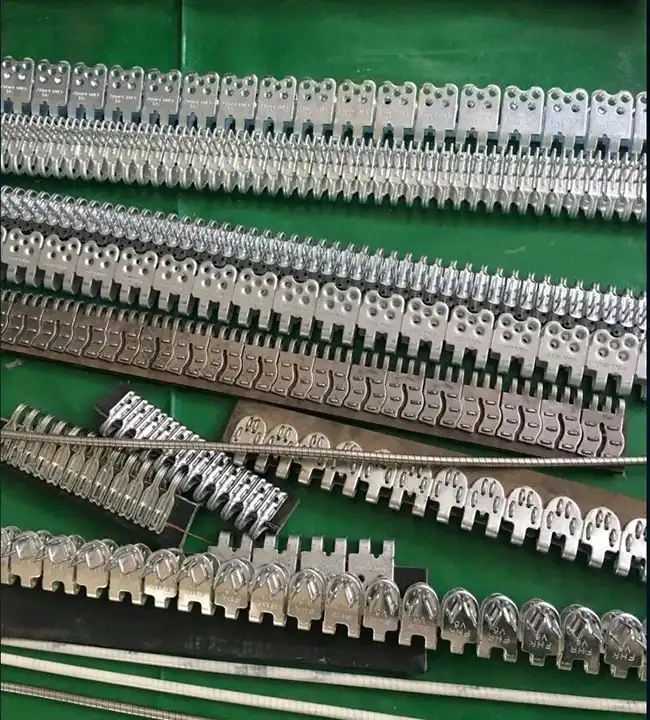
01 Mechanical Splicing

Working Principle: Uses metal belt fasteners or bolts for physical connection.
Key Features:
Mechanical Splicing.webp


  • Simplest operation and fastest execution.

  • Gaps at the joint, prone to wear and material leakage.

  • Lower strength and shorter service life.

Typical Applications: 

Suitable for small-scale, light-duty, or temporary conveying equipment, as well as situations requiring quick repairs.


02


02 Cold Vulcanizing Splicing Method

Cold Vulcanizing Splicing Method.webp


Working Principle: Uses specialized adhesives (such as neoprene) for bonding at room temperature.

Key Features:

  • Requires no large equipment, and the process is simpler than hot vulcanizing.

  • Joint strength and service life are superior to mechanical splicing.

  • Bonding quality is highly influenced by environmental conditions (temperature, humidity, dust) and operator skill.

Typical Applications: Suitable for medium-duty conveyor equipment, particularly in controlled environments such as workshops.


03


03 Hot Vulcanizing Splicing Method

Hot Vulcanizing Splicing.webp

Working Principle: Uses a vulcanizing press to apply pressure and heat to the splice, causing the rubber to undergo chemical cross-linking and achieve a "seamless" integration.

Key Features:

  • Highest splice strength (reaching 80%–90% of the belt’s original strength), very smooth surface, and excellent sealing.

  • Most complex process, requiring specialized equipment and longer operation time.

  • Longest service life, which can last several years.

Typical Applications: Suitable for large-scale, heavy-duty, and critical continuous operation equipment (such as main underground haulage belts in mines, port terminal lines), as well as steel cord belts.


04


04 Process Essentials of Each Splicing Method

Each method has specific operational requirements. Understanding these will help you assess the feasibility of implementation:

Mechanical Splicing: The key is to select the correct belt fastener model and ensure smooth installation to avoid damaging the equipment during operation.

Cold Vulcanizing Splicing: The core lies in the preparation of the splicing surface and the application of adhesive. The belt ends need to be cut into a stepped shape to increase the bonding area, followed by careful grinding and cleaning. The adhesive (such as a neoprene mixture) is applied in multiple coats, and the surfaces are pressed together once the adhesive has evaporated to a "tacky but non-sticky" state.

Hot Vulcanizing Splicing: This is the most specialized process. Taking the splicing of steel cord belts as an example, the main steps include:

  1. Cutting and Grinding: The rubber and steel cords at the splice are stripped in layers, and the cord ends and rubber base are ground into slopes and rough surfaces.

  2. Cleaning and Cement Application: After thorough cleaning with gasoline or similar solvent, rubber cement is applied evenly.

  3. Arrangement and Overlap: The steel cords are arranged and overlapped according to specifications.

  4. Vulcanizing: The splice is placed in a vulcanizing press and held under specific pressure (e.g., 1.0–1.4 MPa) and temperature (140–150°C) for a set period to allow chemical cross-linking to occur.

    05

05 How to Choose the correct Splicing Method

You can select the appropriate method based on your specific needs by considering the following guidelines:

1. Identify Your Primary Requirement

  • Fastest repair → Prioritize mechanical splicing.

  • Long-lasting durability and smooth operation → Prioritize hot vulcanizing splicing.

  • A compromise between simplicity and strength, with suitable indoor working conditions → Consider cold vulcanizing splicing.

2. Consider Belt Type and Operating Scenario

  • Standard fabric conveyor belts: All three methods are applicable; choose based on the above requirements.

  • High-tensile steel cord belts: Hot vulcanizing splicing is mandatory—this is essential for ensuring safe operation.

  • Critical, continuously operating main transport lines (e.g., underground coal mine main belts): Hot vulcanizing splicing is strongly recommended; the initial investment ensures long-term stability.

  • Harsh environments such as wet or dusty conditions: The sealing integrity of hot vulcanizing splicing offers clear advantages over cold vulcanizing and mechanical splicing.

3. Assess Your Own Capabilities and Constraints

  • Equipment and skill level: Hot vulcanizing requires specialized vulcanizing presses and trained personnel; cold vulcanizing demands a certain level of operational skill; mechanical splicing is the simplest.

  • Budget and time: Hot vulcanizing involves higher initial costs and longer execution time (a single splice may take several hours), but long-term maintenance costs are low. Mechanical splicing is the opposite.

Whatsapp

Skype

VK

Send Inquiry

We use cookie to improve your online experience. By continuing to browse this website, you agree to our use of cookie.

Cookies

Please read our Terms and Conditions and this Policy before accessing or using our Services. If you cannot agree with this Policy or the Terms and Conditions, please do not access or use our Services. If you are located in a jurisdiction outside the European Economic Area, by using our Services, you accept the Terms and Conditions and accept our privacy practices described in this Policy.
We may modify this Policy at any time, without prior notice, and changes may apply to any Personal Information we already hold about you, as well as any new Personal Information collected after the Policy is modified. If we make changes, we will notify you by revising the date at the top of this Policy. We will provide you with advanced notice if we make any material changes to how we collect, use or disclose your Personal Information that impact your rights under this Policy. If you are located in a jurisdiction other than the European Economic Area, the United Kingdom or Switzerland (collectively “European Countries”), your continued access or use of our Services after receiving the notice of changes, constitutes your acknowledgement that you accept the updated Policy. In addition, we may provide you with real time disclosures or additional information about the Personal Information handling practices of specific parts of our Services. Such notices may supplement this Policy or provide you with additional choices about how we process your Personal Information.


Cookies

Cookies are small text files stored on your device when you access most Websites on the internet or open certain emails. Among other things, Cookies allow a Website to recognize your device and remember if you've been to the Website before. Examples of information collected by Cookies include your browser type and the address of the Website from which you arrived at our Website as well as IP address and clickstream behavior (that is the pages you view and the links you click).We use the term cookie to refer to Cookies and technologies that perform a similar function to Cookies (e.g., tags, pixels, web beacons, etc.). Cookies can be read by the originating Website on each subsequent visit and by any other Website that recognizes the cookie. The Website uses Cookies in order to make the Website easier to use, to support a better user experience, including the provision of information and functionality to you, as well as to provide us with information about how the Website is used so that we can make sure it is as up to date, relevant, and error free as we can. Cookies on the Website We use Cookies to personalize your experience when you visit the Site, uniquely identify your computer for security purposes, and enable us and our third-party service providers to serve ads on our behalf across the internet.

We classify Cookies in the following categories:
 ●  Strictly Necessary Cookies
 ●  Performance Cookies
 ●  Functional Cookies
 ●  Targeting Cookies


Cookie List
A cookie is a small piece of data (text file) that a website – when visited by a user – asks your browser to store on your device in order to remember information about you, such as your language preference or login information. Those cookies are set by us and called first-party cookies. We also use third-party cookies – which are cookies from a domain different than the domain of the website you are visiting – for our advertising and marketing efforts. More specifically, we use cookies and other tracking technologies for the following purposes:

Strictly Necessary Cookies
These cookies are necessary for the website to function and cannot be switched off in our systems. They are usually only set in response to actions made by you which amount to a request for services, such as setting your privacy preferences, logging in or filling in forms. You can set your browser to block or alert you about these cookies, but some parts of the site will not then work. These cookies do not store any personally identifiable information.

Functional Cookies
These cookies enable the website to provide enhanced functionality and personalisation. They may be set by us or by third party providers whose services we have added to our pages. If you do not allow these cookies then some or all of these services may not function properly.

Performance Cookies
These cookies allow us to count visits and traffic sources so we can measure and improve the performance of our site. They help us to know which pages are the most and least popular and see how visitors move around the site. All information these cookies collect is aggregated and therefore anonymous. If you do not allow these cookies we will not know when you have visited our site, and will not be able to monitor its performance.

Targeting Cookies
These cookies may be set through our site by our advertising partners. They may be used by those companies to build a profile of your interests and show you relevant adverts on other sites. They do not store directly personal information, but are based on uniquely identifying your browser and internet device. If you do not allow these cookies, you will experience less targeted advertising.

How To Turn Off Cookies
You can choose to restrict or block Cookies through your browser settings at any time. Please note that certain Cookies may be set as soon as you visit the Website, but you can remove them using your browser settings. However, please be aware that restricting or blocking Cookies set on the Website may impact the functionality or performance of the Website or prevent you from using certain services provided through the Website. It will also affect our ability to update the Website to cater for user preferences and improve performance. Cookies within Mobile Applications

We only use Strictly Necessary Cookies on our mobile applications. These Cookies are critical to the functionality of our applications, so if you block or delete these Cookies you may not be able to use the application. These Cookies are not shared with any other application on your mobile device. We never use the Cookies from the mobile application to store personal information about you.

If you have questions or concerns regarding any information in this Privacy Policy, please contact us by email at . You can also contact us via our customer service at our Site.


WhatsApp avatar

Click to Chat.

Im online now.

Hey, my name is Tim. How can I assist you today?

WhatsApp Us

WhatsApp us